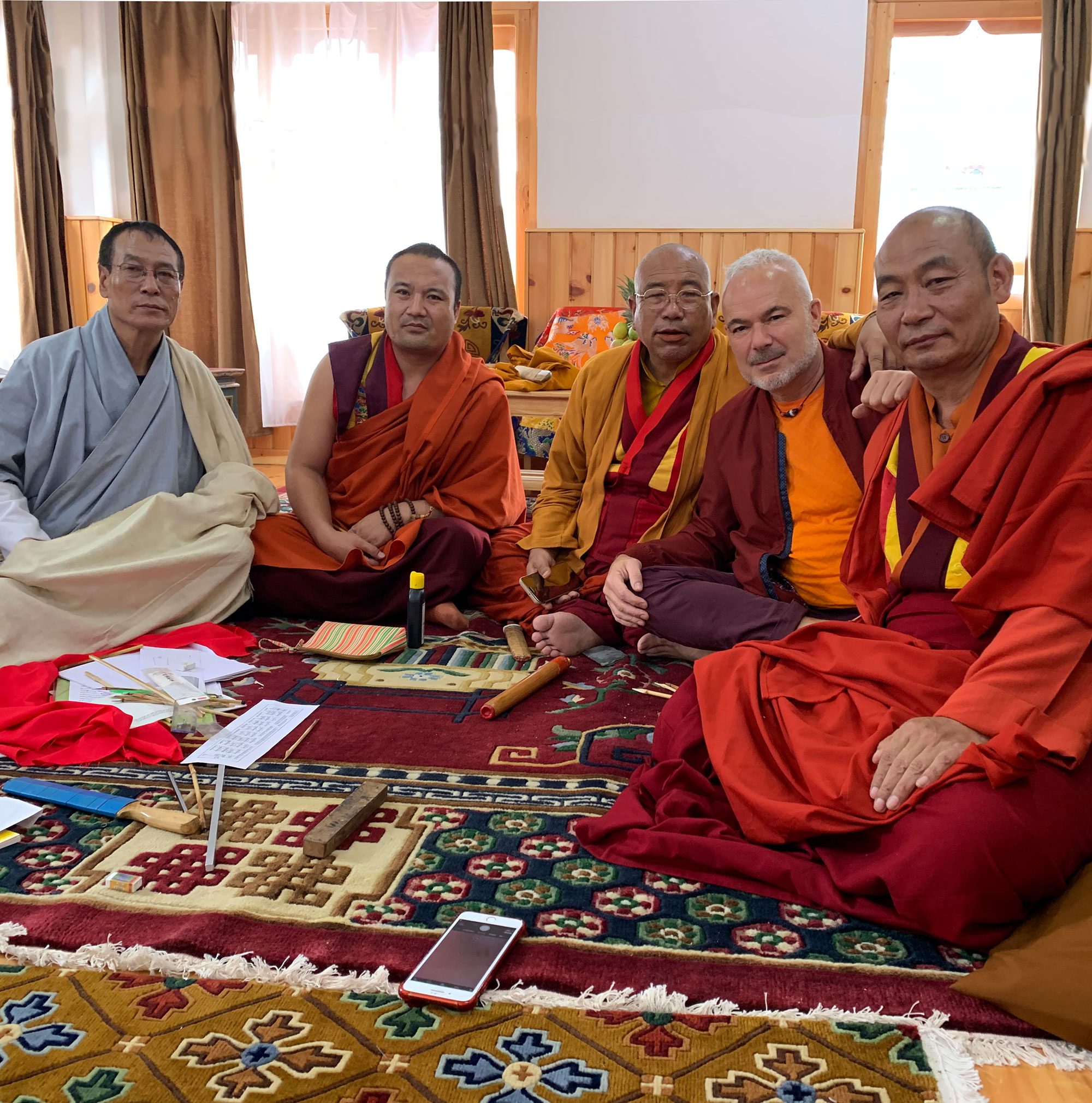
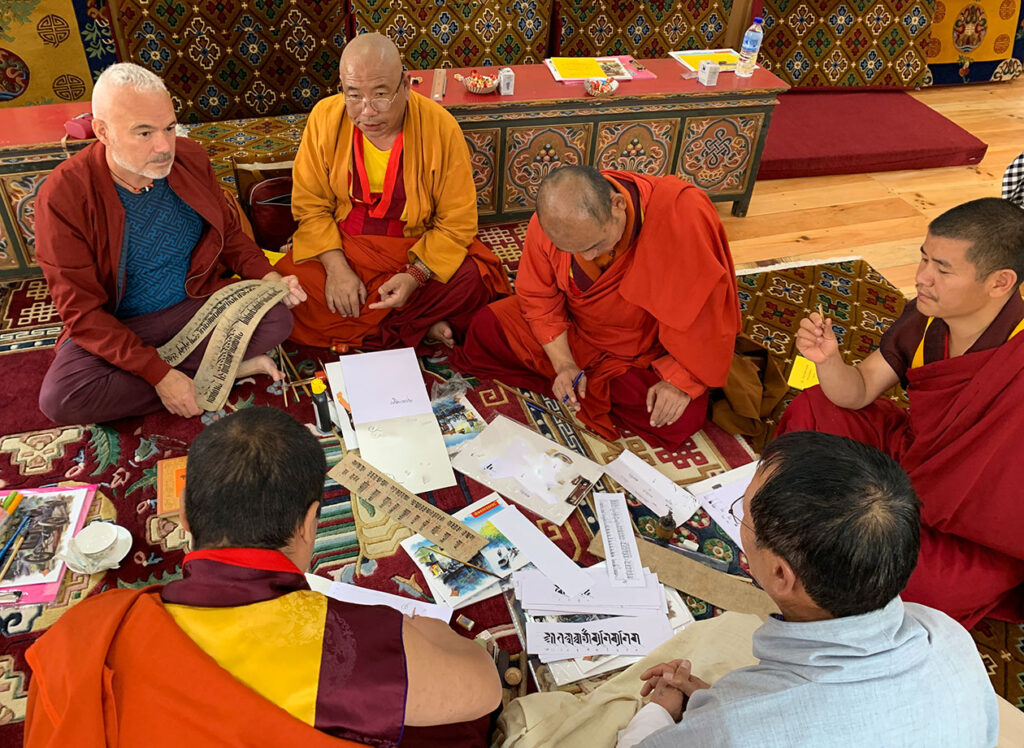
During 2019 Tashi collaborated with a small group of eminent calligraphy Masters and Khenpos in the Kingdom of Bhutan to address a cultural preservation crisis.
Tashi had hoped to meet a calligraphy master on his first visit to Bhutan, however none could be found across the kingdom at that time. This alerted the Bhutanese Monastic Body that their written language, Dzongkha, had been neglected. Moreover, it was realised that teaching calligraphy had not been part of their curriculum since the 80’s.
On Tashi’s third visit, the Bhutanese Monastic Body managed to find the last few calligraphy masters and scholars and brought them together with Tashi to brainstorm how to effectively re-establish their writing systems in the monastic and school curriculums.This was joyous occasion with Tashi among like-minded calligraphers and Khenpos.
Since this initiative, calligraphy training has resumed, with new practitioners training and teaching, and instructional materials published and distributed.
This is perhaps one small demonstration of how, as humanity turns to the technical age of communication, languages and calligraphy traditions are widely being threatened and lost. Traditions, such as unique writing systems developed over hundreds of years, can be so easily lost in just one generation of neglect.
I have to admit – I am a big fan of Tashi’s work.
His Majesty the King of Bhutan