“We all take words for granted: too often we ignore their power, but the calligrapher grasps their potential.”
Dharma-Art is a term first coined by Chögyam Trungpa Rinpoché, which describes art that is born from a meditative spiritual practice that may uplift and awaken.
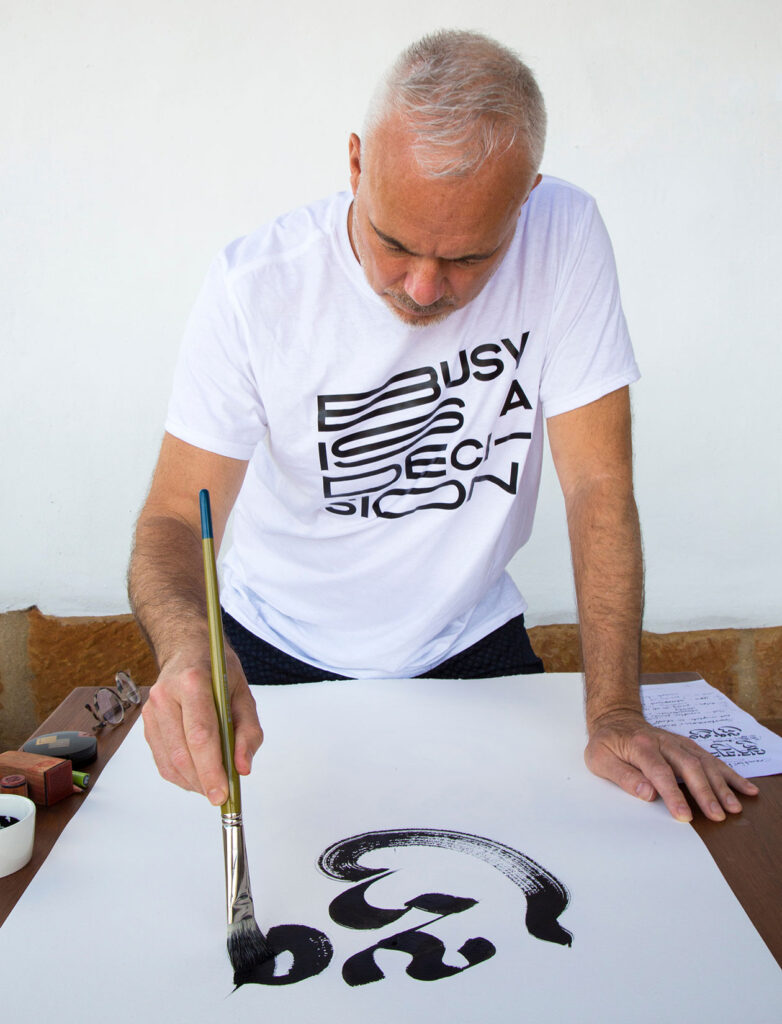
Tashi Mannox is a contemporary Dharma artist and Tibetan calligrapher based in the Wye Valley, U.K. His spiritual connection runs deep, inherited from parents who were themselves artists and hosted visiting Tibetan lamas.
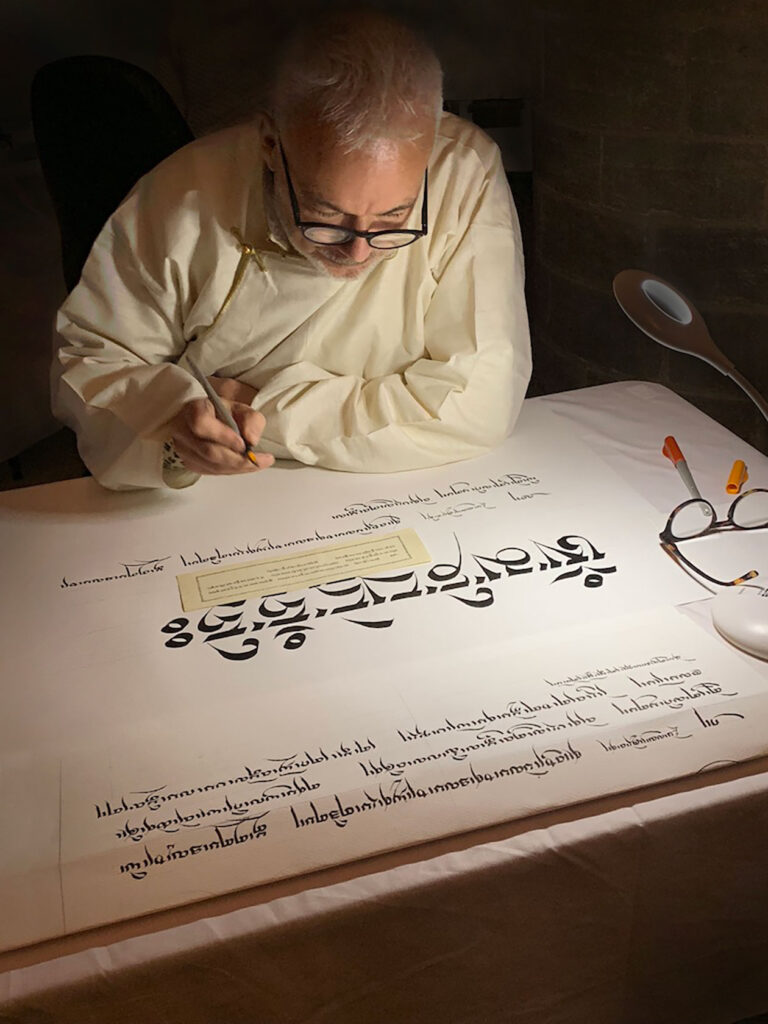
His journey began as a schoolboy in Birmingham, attending teachings on Buddhism. After completing a fine art degree, he joined the Kagyu order of Buddhist monks at age 22, studying for 18 years. During monastic life, he completed a four-year retreat, studied with many of the great Lamas and apprenticed under Master of Tibetan art Sherab Palden Beru, learning traditional Tibetan temple decoration and calligraphy through meticulous manuscript copying.
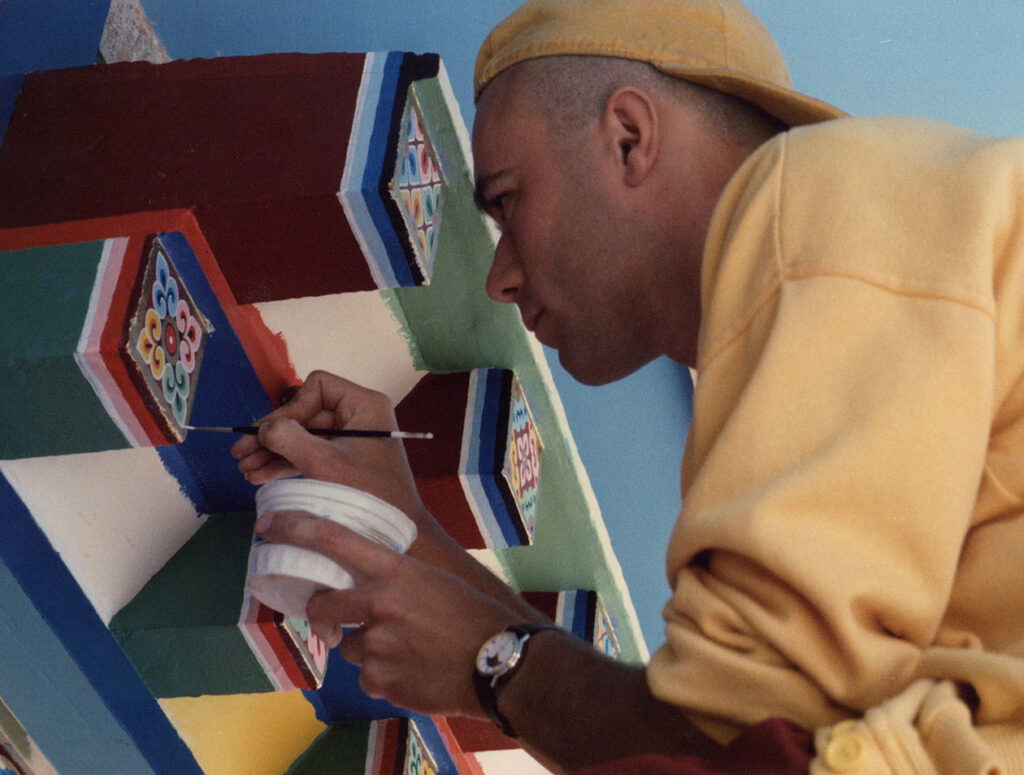
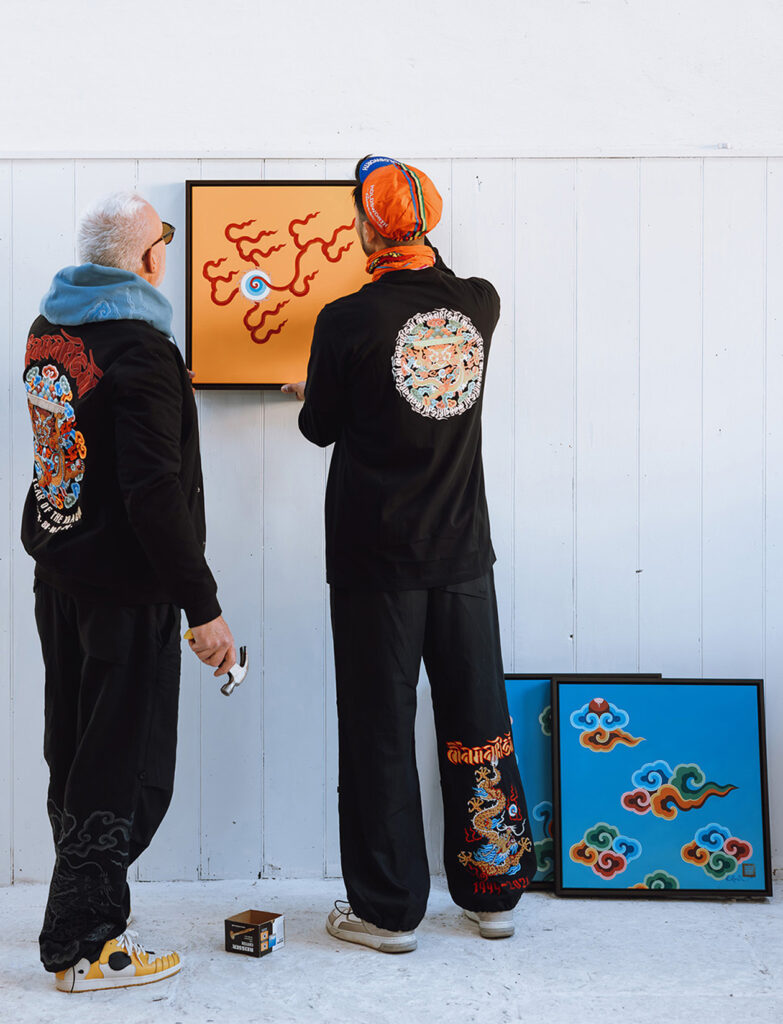
He left monastic life around 2000 to pursue art as a secular Dharma artist, believing he could reach a wider audience. His current practice blends the “universality of Buddha-Dharma with the innovation and wry humour of contemporary practice.”
Early Life & Spiritual Influences –
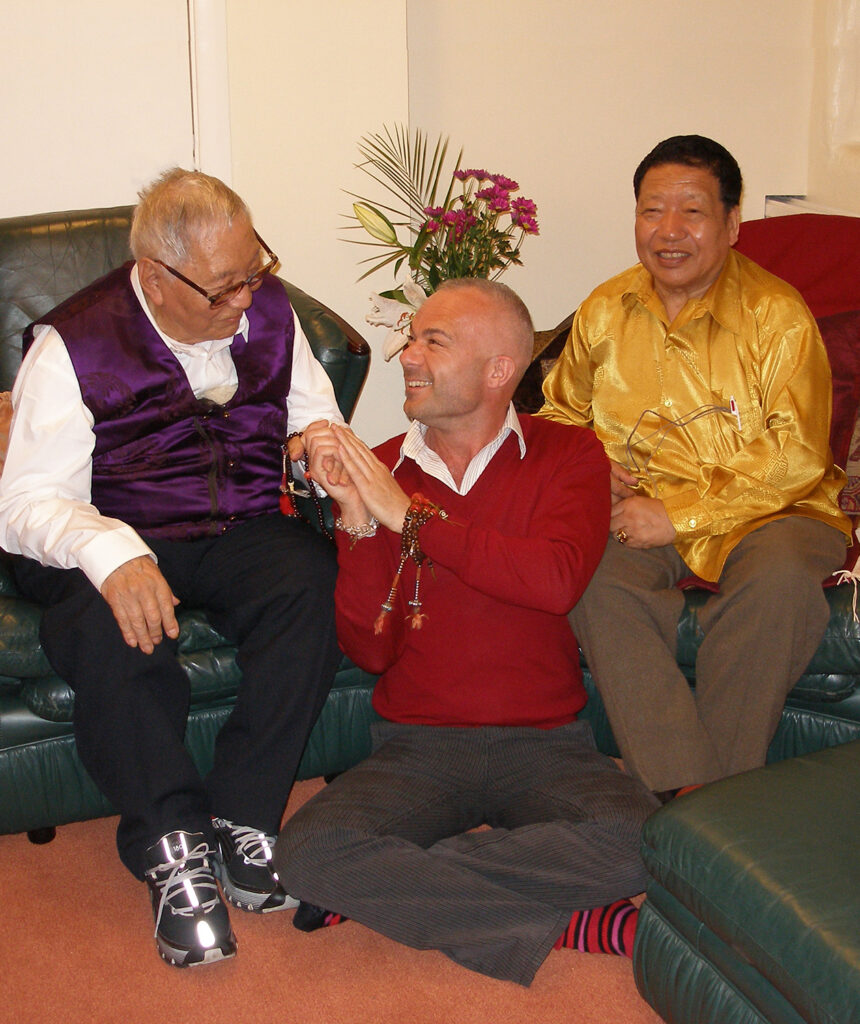
At age 11, his mother introduced him to Transcendental Meditation to aid concentration. His father became interested in Buddhism and invited lamas to their home. Akong Tulku Rinpoche and Lama Shenpen Hookham became his lifetime mentors.
He became friends with Burmese Forest-monk Ven Dr Rewata Dhamma and two Tibetan lamas from Palpung monastery living in Birmingham.
Formal Spiritual Training –
At 13, he formally took Buddhist refuge through a ceremony performed by Ven Kalu Rinpoche. That year, he met the 16th Gyalwa Karmapa, witnessing the famous Black Crown Ceremony, which significantly inspired Tashi and his close family.
At 15, he traveled alone to Brussels to receive teachings from Khenpo Tsultrim Gyamtso Rinpoché, beginning his study of Tibetan reading and writing through copying sacred texts.
Monastic Life –
At 22, he received novice monk vows from Ven Kalu Rinpoche under Akong Tulku’s direction. Two years later, he became a fully ordained Gelong monk under H.E. Situ Rinpoché, beginning 18 years of monastic training in Kagyu and Nyingma traditions.
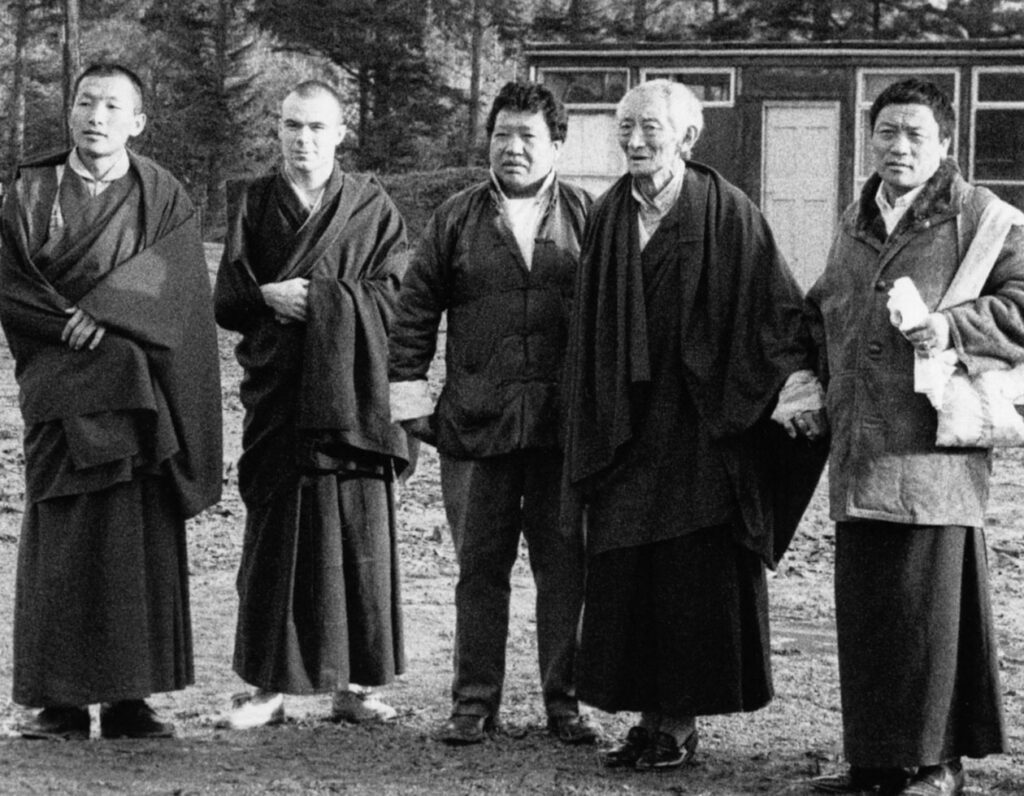
During his time at Samye Ling monastery in Scotland, he studied monastic sciences including mandala construction and Tibetan calligraphy from Ven Tenga Rinpoché. He apprenticed under master Sherab Palden Beru in traditional Tibetan arts, assisted in building and decorating a traditional Tibetan temple, and learned traditional monk robe making and ceremonial costume creation under Akong Tulku.
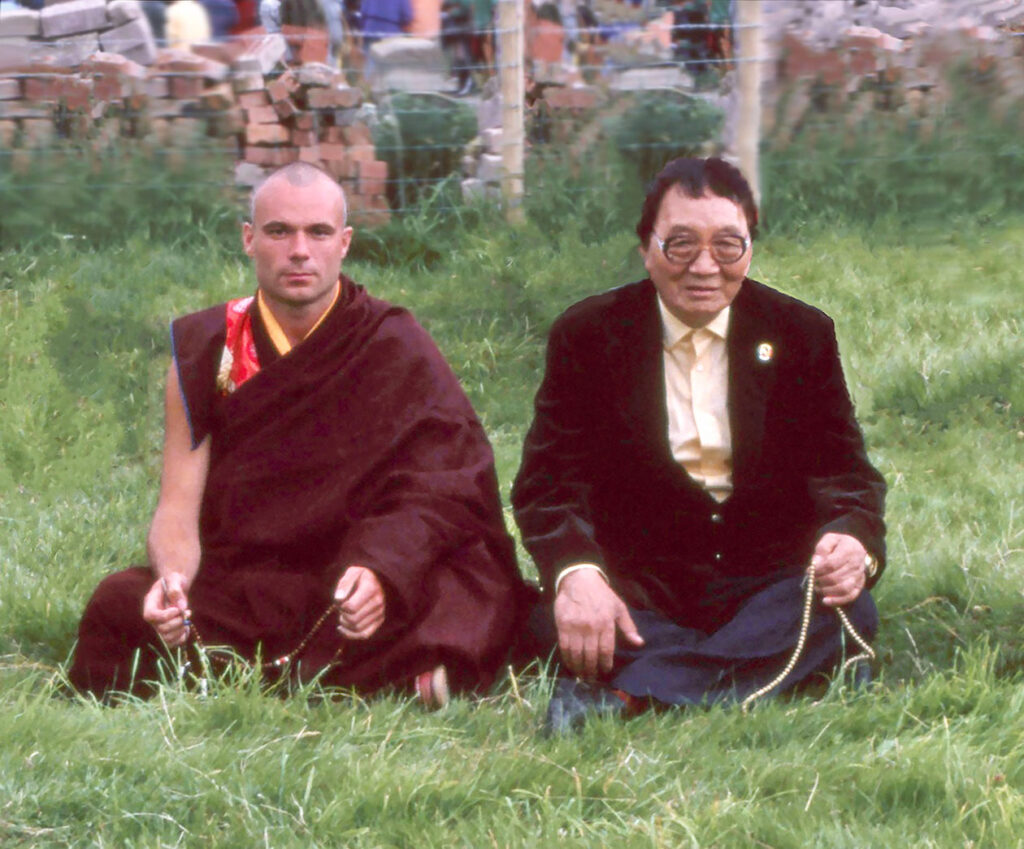
H.E. Situ Rinpoché, who regularly resided at Samye Ling, guided Tashi’s artistic development and approved his first personal seal. It was chiefly Akong Rinpoche who encouraged and kept a close eye on Tashi’s progress as a calligraphy artist.
During a four-year cloistered retreat directed by Lama Yeshi Losal Rinpoché (with visiting instruction from Situ Rinpoché, Thrangu Rinpoché, and Akong Tulku), Tashi deepened his meditation and tantric yoga practice.
As a Scribe –
During and after the retreat, Tashi worked as a scribe for many years, meticulously copying ancient Tibetan manuscripts of sutras and Dharma practices. Even writing on a daily basis it took a year or so to complete a single volume. These reproduced manuscripts became everyday prayer books still in use today.
Final Monastic Years –
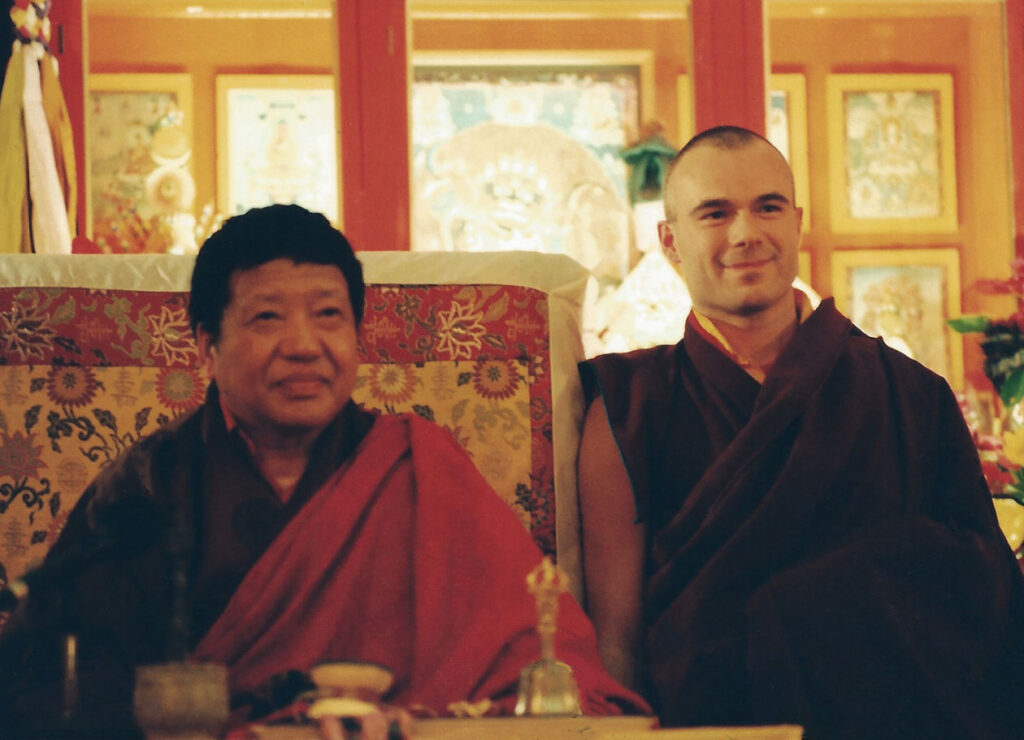
The last seven years as a monk, he served as devoted attendant to Akong Tulku, assisting with refuge ceremonies, empowerments, and visiting charitable projects in Nepal and Tibet. This educated him in commissioning ceremonial dharma objects and woodcarving design for Western dharma centres.
Transition to Contemporary Practice –
At the millennium’s turn, after deliberation, he left monastic life to pursue an art career, intending to reach wider audiences and introduce Dharma through art and teaching.
He first travelled to India for a purification pilgrimage to Bodhgaya and sacred sites. Seeking authentic teachers of Lantsa and Wartu Sanskrit scripts, he travelled to Dharamsala where the Nechung oracle directed him to Lama Pema Lodrup, one of the last remaining masters of these scripts.
Based initially in London, he perfected various Tibetan scripts and styles, establishing himself as an international artist with solo exhibitions in London, Los Angeles, Moscow, New York, Sharjah (UAE), Bhutan, and South Korea.
Recent Work –
Over the past 15 years, he has conducted numerous worldwide workshops, courses, and retreats teaching Tibetan calligraphy and the meditative approach to creativity, with active involvement in conservation and preservation of Tibetan and Dzongkha written languages.
Spring 2027 sees the launch of his second book — a Tibetan writing manual with Wisdom Publications — and filming instruction videos for their online academy.